A Complete Guide to Renewable Energy Sources and Examples
MUMBAI, INDIA, August 19, 2026 /EINPresswire.com/ -- Every individual relies on power daily to run appliances, light up homes and keep transport moving. As fossil fuel reserves decline and climate pressures grow, switching to clean energy has become essential for a sustainable future. According to the International Energy Agency (IEA), renewable energy sources now generate over 30% of global electricity. Imagine powering entire cities purely from natural sunlight, flowing water and natural air currents without harming the environment. Transitioning away from coal and oil reduces greenhouse gas emissions while securing long-term power independence. Clean power adoption is accelerating globally, helping communities lower pollution and create stable local economies.
What are Renewable Energy Sources?
Renewable energy sources are natural energy flows that replenish themselves continuously without depleting Earth's finite resources. Unlike coal, oil or gas, these clean power systems generate electricity with minimal carbon emissions during operation.
These power systems capture ongoing natural processes, such as sunshine, river flows, atmospheric winds and subterranean heat and convert them directly into electricity. These power generation technologies provide sustainable electricity over long lifespans because natural cycles repeat endlessly. Harnessing these natural flows helps modern electrical grids reduce reliance on imported fossil fuels while providing continuous power for residential, commercial and industrial operations worldwide.
What are the Main Types of Renewable Resources?
The main types of renewable resources include solar energy, wind power, hydroelectricity, biomass and geothermal energy. Each system harnesses natural cycles to generate reliable electricity.
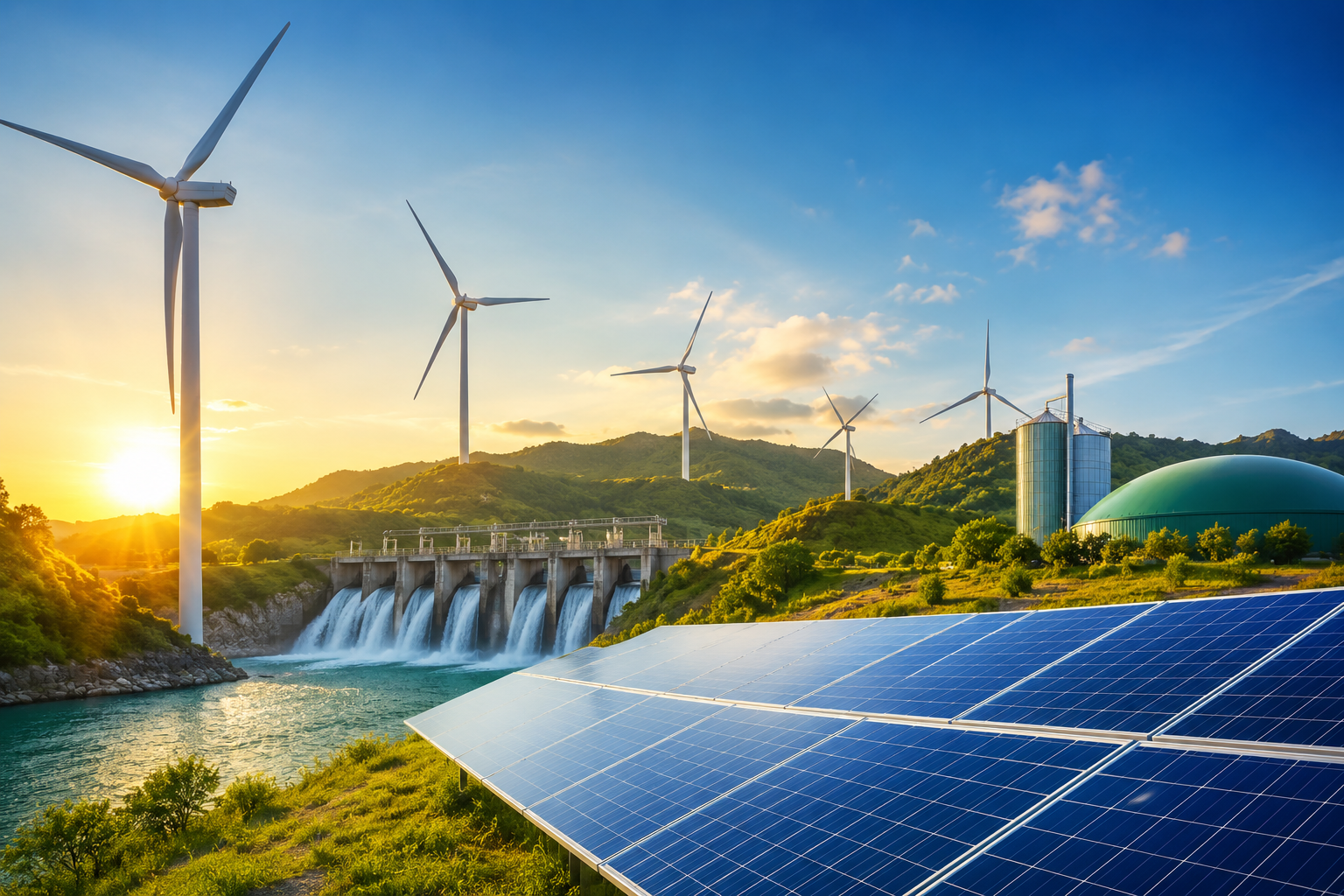
The main types of renewable energy resources include solar energy, which uses sunlight and is commonly applied in utility-scale power generation and rooftop systems; wind energy, which harnesses atmospheric airflow for onshore and offshore wind farms; hydroelectric energy, which uses moving water and is commonly utilized in reservoir dams and pumped storage projects (PSP); biomass energy, which comes from organic materials and is used for biofuels and direct thermal combustion; and geothermal energy, which derives from the Earth’s internal heat and is used for direct heating and steam turbine generation.
How Does Solar Energy Work?
Solar energy works by capturing sunlight using photovoltaic (PV) materials and converting it directly into electric current. Photovoltaic cells create an electrical field when sunlight strikes their semiconductor layers.
Modern solar infrastructure relies heavily on high-efficiency cell architectures. Advanced solar modules utilize TOPCon N-type solar cells, which achieve efficiency rates between 25% and 26%. Modern producers, including energy manufacturers like Avaada Group, produce high-wattage module formats ranging from 610 Wp to 720 Wp to maximize power output. Bifacial modules capture light on both sides to increase total power yield on solar power plants. According to the Ministry of New and Renewable Energy (MNRE), India's total solar capacity reached over 132 GW as on 30th June 2026.
How Does Wind Energy Generate Power?
Wind energy generates power by turning kinetic energy from atmospheric airflow into mechanical energy via large turbine blades. The spinning blades rotate a central shaft connected to a generator, creating electricity.
● Onshore Wind: Turbines sit on land where consistent natural air currents blow across flat terrains or hillsides.
● Offshore Wind: Turbines sit on ocean platforms to capture strong marine winds, yielding higher energy totals.
Modern power networks pair wind sites with grid-scale storage solutions to maintain a balanced supply because wind speed fluctuates throughout the day. India’s total wind capacity surpassed 53 GW.
What is Hydroelectric Power and Storage?
Hydroelectric power generates electricity by channeling moving water through turbines connected to electric generators. Natural river flows or elevated reservoirs supply the force required to turn the turbines.
Beyond standard hydro dams, grid networks rely on Pumped Storage Projects (PSP) to store energy over long durations. PSP systems function as large "water batteries". During hours of low electricity demand, excess clean power pumps water uphill to a higher reservoir. When electricity demand peaks, water is released back down through power turbines, delivering quick grid stability and reliable power.
How Do Biomass and Geothermal Energy Function?
Biomass and geothermal systems offer direct thermal energy and continuous base-load renewable power without relying on weather conditions.
Biomass Energy
Biomass energy uses organic material, such as agricultural residues, wood waste and dedicated energy crops, to produce heat, power or liquid biofuels. Direct combustion or anaerobic digestion breaks down the organic matter to create steam for turbine generators or biogas for heating.
Geothermal Energy
Geothermal energy taps into heat deep within the Earth's crust. Deep wells pump natural underground steam or hot water upward to drive surface turbines. Geothermal plants operate day and night continuously, providing reliable power directly to local electrical grids.
How Do Energy Storage Solutions Address Clean Energy Intermittency?
Energy storage solutions address clean energy intermittency by storing extra electricity generated during peak production periods for later use.
Key storage options include:
● Battery Energy Storage Systems (BESS): Advanced battery setups store excess solar or wind energy to balance power supply during peak usage hours.
● Hybrid Renewable Energy Systems: Combining solar panels, wind turbines and storage batteries at a single location ensures an uninterrupted electricity flow.
What are the Main Benefits of Transitioning to Clean Power?
The main benefits of transitioning to clean power are lower greenhouse gas emissions, long-term energy cost savings and improved public health.
1. Environmental Decarbonization: Clean power generation reduces greenhouse gas emissions, combating rising global temperatures.
2. Economic Savings: Renewable energy technologies reduce fuel import costs while creating localized green jobs across production and installation sectors.
3. Resource Sustainability: Harnessing infinite natural flows preserves non-renewable resources for future generations.
Conclusion
Transitioning to renewable energy sources is essential for building a sustainable, low-carbon power grid. Combining solar, wind, hydro, biomass and geothermal energy with storage solutions like BESS and Pumped-Storage Projects ensures reliable power delivery around the clock. Embracing high-efficiency module technologies and grid-scale storage accelerates the global shift toward clean, cost-effective energy.
What are Renewable Energy Sources?
Renewable energy sources are natural energy flows that replenish themselves continuously without depleting Earth's finite resources. Unlike coal, oil or gas, these clean power systems generate electricity with minimal carbon emissions during operation.
These power systems capture ongoing natural processes, such as sunshine, river flows, atmospheric winds and subterranean heat and convert them directly into electricity. These power generation technologies provide sustainable electricity over long lifespans because natural cycles repeat endlessly. Harnessing these natural flows helps modern electrical grids reduce reliance on imported fossil fuels while providing continuous power for residential, commercial and industrial operations worldwide.
What are the Main Types of Renewable Resources?
The main types of renewable resources include solar energy, wind power, hydroelectricity, biomass and geothermal energy. Each system harnesses natural cycles to generate reliable electricity.
The main types of renewable energy resources include solar energy, which uses sunlight and is commonly applied in utility-scale power generation and rooftop systems; wind energy, which harnesses atmospheric airflow for onshore and offshore wind farms; hydroelectric energy, which uses moving water and is commonly utilized in reservoir dams and pumped storage projects (PSP); biomass energy, which comes from organic materials and is used for biofuels and direct thermal combustion; and geothermal energy, which derives from the Earth’s internal heat and is used for direct heating and steam turbine generation.
How Does Solar Energy Work?
Solar energy works by capturing sunlight using photovoltaic (PV) materials and converting it directly into electric current. Photovoltaic cells create an electrical field when sunlight strikes their semiconductor layers.
Modern solar infrastructure relies heavily on high-efficiency cell architectures. Advanced solar modules utilize TOPCon N-type solar cells, which achieve efficiency rates between 25% and 26%. Modern producers, including energy manufacturers like Avaada Group, produce high-wattage module formats ranging from 610 Wp to 720 Wp to maximize power output. Bifacial modules capture light on both sides to increase total power yield on solar power plants. According to the Ministry of New and Renewable Energy (MNRE), India's total solar capacity reached over 132 GW as on 30th June 2026.
How Does Wind Energy Generate Power?
Wind energy generates power by turning kinetic energy from atmospheric airflow into mechanical energy via large turbine blades. The spinning blades rotate a central shaft connected to a generator, creating electricity.
● Onshore Wind: Turbines sit on land where consistent natural air currents blow across flat terrains or hillsides.
● Offshore Wind: Turbines sit on ocean platforms to capture strong marine winds, yielding higher energy totals.
Modern power networks pair wind sites with grid-scale storage solutions to maintain a balanced supply because wind speed fluctuates throughout the day. India’s total wind capacity surpassed 53 GW.
What is Hydroelectric Power and Storage?
Hydroelectric power generates electricity by channeling moving water through turbines connected to electric generators. Natural river flows or elevated reservoirs supply the force required to turn the turbines.
Beyond standard hydro dams, grid networks rely on Pumped Storage Projects (PSP) to store energy over long durations. PSP systems function as large "water batteries". During hours of low electricity demand, excess clean power pumps water uphill to a higher reservoir. When electricity demand peaks, water is released back down through power turbines, delivering quick grid stability and reliable power.
How Do Biomass and Geothermal Energy Function?
Biomass and geothermal systems offer direct thermal energy and continuous base-load renewable power without relying on weather conditions.
Biomass Energy
Biomass energy uses organic material, such as agricultural residues, wood waste and dedicated energy crops, to produce heat, power or liquid biofuels. Direct combustion or anaerobic digestion breaks down the organic matter to create steam for turbine generators or biogas for heating.
Geothermal Energy
Geothermal energy taps into heat deep within the Earth's crust. Deep wells pump natural underground steam or hot water upward to drive surface turbines. Geothermal plants operate day and night continuously, providing reliable power directly to local electrical grids.
How Do Energy Storage Solutions Address Clean Energy Intermittency?
Energy storage solutions address clean energy intermittency by storing extra electricity generated during peak production periods for later use.
Key storage options include:
● Battery Energy Storage Systems (BESS): Advanced battery setups store excess solar or wind energy to balance power supply during peak usage hours.
● Hybrid Renewable Energy Systems: Combining solar panels, wind turbines and storage batteries at a single location ensures an uninterrupted electricity flow.
What are the Main Benefits of Transitioning to Clean Power?
The main benefits of transitioning to clean power are lower greenhouse gas emissions, long-term energy cost savings and improved public health.
1. Environmental Decarbonization: Clean power generation reduces greenhouse gas emissions, combating rising global temperatures.
2. Economic Savings: Renewable energy technologies reduce fuel import costs while creating localized green jobs across production and installation sectors.
3. Resource Sustainability: Harnessing infinite natural flows preserves non-renewable resources for future generations.
Conclusion
Transitioning to renewable energy sources is essential for building a sustainable, low-carbon power grid. Combining solar, wind, hydro, biomass and geothermal energy with storage solutions like BESS and Pumped-Storage Projects ensures reliable power delivery around the clock. Embracing high-efficiency module technologies and grid-scale storage accelerates the global shift toward clean, cost-effective energy.
Vineet Mittal
Avaada Group
+91 1800 571 3094
avaada@avaada.com
Legal Disclaimer:
EIN Presswire provides this news content "as is" without warranty of any kind. We do not accept any responsibility or liability for the accuracy, content, images, videos, licenses, completeness, legality, or reliability of the information contained in this article. If you have any complaints or copyright issues related to this article, kindly contact the author above.
