

Energy Drinks Market to Reach USD 153.90 Billion by 2035, Growing at 6.30% CAGR
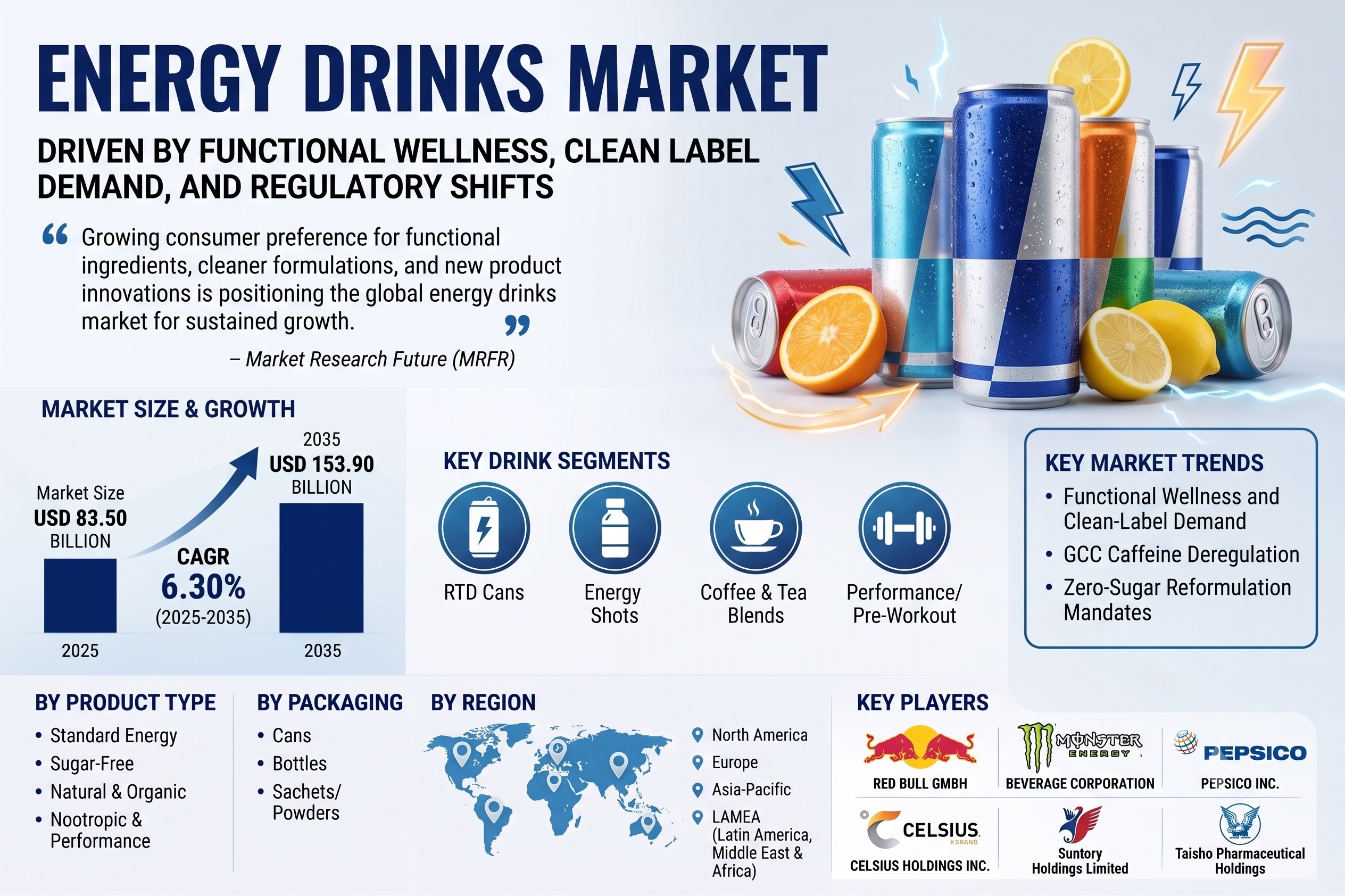
Energy Drinks Market
Rising demand for functional wellness beverages, zero-sugar innovations, and emerging market expansion are accelerating global energy drinks market growth.
The energy drinks market is evolving beyond caffeine as consumers increasingly demand functional wellness, clean-label ingredients, and zero-sugar innovations that support everyday performance.”
NEW YORK, NY, UNITED STATES, July 17, 2026 /EINPresswire.com/ -- Market Overview— Market Research Future (MRFR)
The global Energy Drinks Market is experiencing strong expansion as consumers increasingly look for convenient beverages that provide sustained energy, improved mental alertness, enhanced physical performance, and added functional health benefits. According to Market Research Future, the market was valued at USD 83.50 Billion in 2025 and is projected to reach USD 153.90 Billion by 2035, reflecting a compound annual growth rate of 6.30% during the forecast period from 2025 to 2035.
The market has evolved far beyond its original position as a caffeine-driven beverage category. Today’s consumers are seeking products that combine energy support with nutritional value, natural ingredients, cognitive benefits, hydration, and clean-label appeal. In response, manufacturers are investing in formulations that feature vitamins, amino acids, botanical extracts, electrolytes, adaptogens, and nootropic ingredients. These innovations are helping brands attract health-conscious consumers while maintaining the performance-focused benefits that continue to define the category.
The study period from 2025 to 2035 marks a transformative decade for the industry. Premiumization, regulatory change, sustainability initiatives, digital retail growth, and ongoing product innovation are expected to reshape consumer buying behavior and create new opportunities for manufacturers across both established and emerging markets.
Key Market Highlights
The Energy Drinks Market continues to show strong long-term growth, supported by changing consumer lifestyles and ongoing product innovation. The market size reached USD 83.50 Billion in 2025 and is expected to rise to USD 153.90 Billion by 2035. This growth path is supported by a CAGR of 6.30% over the forecast period, with functional wellness and clean-label demand emerging as the leading growth drivers. Regulatory shifts such as GCC caffeine deregulation are opening new commercial opportunities, while zero-sugar reformulation is becoming a core product strategy among leading brands. Nootropic and adaptogen-based energy drinks represent one of the fastest-growing opportunities, especially as consumers look for more balanced and performance-focused beverages. At the same time, Africa and Southeast Asia are becoming increasingly important growth markets, and sustainable packaging is gaining momentum as both a brand differentiator and a revenue driver.
These indicators show that the market is rapidly shifting from a traditional stimulant beverage segment into a multifunctional wellness category designed to meet the changing expectations of modern consumers.
Get Full PDF Sample Copy of Report: (Including Full TOC, List of Tables & Figures, Chart) @ https://www.marketresearchfuture.com/sample_request/1916
Functional Wellness Reshaping Consumer Demand
One of the strongest forces driving market growth is the rising popularity of functional wellness beverages. Consumers today expect more than a short-term energy lift; they increasingly want beverages that support overall physical and mental wellbeing. This shift has encouraged manufacturers to create products that promote sustained energy release, mental alertness, recovery, hydration, and stress management through carefully selected functional ingredients.
Energy drink formulations now commonly include B vitamins, green tea extracts, guarana, ginseng, L-theanine, taurine, electrolytes, antioxidants, and natural caffeine sources. These ingredients are being used to develop beverages that fit active lifestyles, fitness routines, sports participation, remote work habits, and demanding professional schedules. As a result, the consumer base has expanded well beyond athletes and young adults to include professionals, students, gamers, fitness enthusiasts, and health-conscious consumers looking for premium beverage options.
The market is also benefiting from growing awareness of ingredient transparency. Consumers increasingly prefer recognizable ingredients over artificial stimulants, which is encouraging brands to invest in natural formulations and scientifically supported functional ingredients. This trend is expected to remain a major influence on product development and consumer loyalty throughout the forecast period.
Clean-Label Products Continue to Gain Momentum
Clean-label products have become one of the most important purchasing factors across the global beverage industry. Consumers are paying closer attention to ingredient lists and are increasingly selecting products that contain fewer artificial additives, preservatives, synthetic colors, and excessive sweeteners. This shift has prompted manufacturers to reformulate existing products and introduce new clean-label energy drinks featuring plant-based caffeine sources, organic ingredients, fruit extracts, herbal adaptogens, and naturally derived flavors.
Brands that emphasize transparency, sustainability, and ingredient quality are strengthening customer loyalty while attracting premium consumers who are willing to pay more for healthier alternatives. Clean-label positioning is no longer limited to niche health-focused products; it is becoming a mainstream expectation across many beverage categories, including energy drinks. As consumers continue to prioritize wellness and authenticity, clean-label innovation is expected to remain one of the industry’s strongest growth catalysts throughout the forecast period.
Zero-Sugar Reformulation Accelerates Innovation
The rising prevalence of obesity, diabetes, and other lifestyle-related diseases has significantly changed consumer attitudes toward sugar consumption. At the same time, governments in multiple countries are introducing sugar reduction initiatives, taxation policies, and nutritional labeling requirements that encourage manufacturers to develop healthier alternatives. These developments have accelerated the move toward zero-sugar and low-calorie energy drinks, which are becoming mainstream offerings rather than niche products.
Manufacturers are increasingly using advanced sweetening technologies based on stevia, monk fruit, erythritol, sucralose, and other alternative sweeteners to deliver appealing taste profiles while reducing caloric content. Zero-sugar reformulation has become a competitive necessity rather than a simple product extension, with many leading brands expanding their sugar-free portfolios to meet changing consumer preferences. This transition is expected to support sustained category growth while broadening consumer acceptance among older demographics and health-conscious individuals who may previously have avoided energy drinks because of sugar concerns.
Regulatory Developments Creating New Opportunities
Regulatory changes continue to shape global market dynamics and influence the pace of product expansion across regions. One of the most notable developments highlighted by the market is GCC caffeine deregulation, which is expected to improve market accessibility and encourage greater product availability across Gulf Cooperation Council countries. As regulatory frameworks become more standardized, manufacturers can introduce broader product portfolios while expanding regional distribution networks.
Improved regulatory clarity also creates favorable conditions for international brands entering emerging markets with premium formulations designed to match local consumer preferences. In many cases, clearer rules around caffeine content, labeling, and product composition reduce barriers to entry and support faster commercialization. This regulatory evolution is expected to play an important role in unlocking new demand across the Middle East and other developing regions over the forecast period.
Innovation Through Nootropic and Adaptogen Formulations
The next generation of energy drinks is moving beyond conventional stimulation and toward more advanced functional positioning. Manufacturers are increasingly investing in nootropic ingredients that support cognitive performance, concentration, memory, productivity, and mental clarity. These formulations are especially appealing to consumers who want energy without the sharp peaks and crashes often associated with traditional stimulant beverages.
Adaptogens such as ashwagandha, rhodiola, holy basil, and medicinal mushrooms are also gaining popularity because they support stress management and sustained energy without excessive stimulant dependence. Consumers are showing growing interest in balanced energy products that promote overall wellbeing while reducing fatigue after consumption. This emerging category represents one of the most promising opportunities throughout the forecast period and is expected to attract premium pricing while encouraging continued product differentiation.
Companies that invest early in clinically supported functional ingredients are likely to strengthen their competitive positioning in both developed and emerging markets. As consumer awareness of cognitive wellness and stress resilience continues to rise, nootropic and adaptogen-infused energy drinks are expected to move from innovation-led offerings into a more established segment of the market.
Regional Growth Opportunities
The Energy Drinks Market continues to show different growth patterns across global regions, with each geography offering distinct demand drivers and commercial opportunities. North America remains one of the largest markets due to high consumer awareness, premium product adoption, broad retail availability, and strong brand recognition. The region continues to support innovation in functional beverages, particularly among consumers seeking performance, convenience, and healthier formulations.
Europe also shows healthy demand supported by product innovation, functional beverage consumption, and expanding clean-label preferences. The region’s mature retail environment and strong regulatory focus on ingredient transparency continue to encourage reformulation and premiumization. Asia-Pacific, meanwhile, represents one of the fastest-growing regional markets, driven by rising disposable incomes, rapid urbanization, changing lifestyles, and increasing participation in sports and fitness activities.
Latin America continues to offer steady expansion opportunities as premium beverage penetration increases across major metropolitan regions. The Middle East is benefiting from evolving retail infrastructure, younger demographics, and regulatory developments including GCC caffeine deregulation. Africa is emerging as a high-potential market where expanding retail channels, rising urban populations, and improving consumer purchasing power are expected to accelerate long-term growth. Together, Africa and Southeast Asia represent significant opportunities for manufacturers seeking future revenue expansion beyond mature markets.
Distribution Channels Continue to Evolve
Digital transformation continues to reshape beverage retail worldwide. Although supermarkets and convenience stores remain dominant sales channels, online grocery platforms, direct-to-consumer subscriptions, and quick-commerce delivery services are expanding rapidly. Consumers are increasingly purchasing beverages through mobile applications and digital marketplaces that offer subscription discounts, product recommendations, and personalized purchasing experiences.
Social media marketing, influencer partnerships, and fitness-focused digital communities are also becoming powerful tools for brand engagement and customer acquisition. These channels allow manufacturers to communicate product benefits more effectively while building stronger relationships with target audiences. Companies that invest in omnichannel distribution strategies are expected to strengthen customer retention while expanding market reach across both urban and suburban consumer bases.
Sustainable Packaging Becoming a Competitive Advantage
Sustainability has become an important purchasing consideration for beverage consumers. Manufacturers are investing in recyclable aluminum cans, lightweight packaging materials, recycled plastics, biodegradable solutions, and carbon footprint reduction initiatives to align with changing consumer expectations and environmental goals.
Sustainable packaging is increasingly viewed not only as an environmental responsibility but also as a meaningful revenue driver capable of strengthening brand perception and consumer loyalty. Companies that communicate measurable sustainability achievements continue to differentiate themselves within increasingly competitive retail environments. The combination of premium packaging aesthetics and environmentally responsible manufacturing practices is expected to influence purchasing decisions across younger consumer demographics, particularly those who value both convenience and climate-conscious branding.
Competitive Landscape
The Energy Drinks Market remains highly competitive, with global beverage companies continuously investing in innovation, marketing, product diversification, and international expansion. Key companies profiled include Red Bull GmbH, Monster Beverage Corporation, PepsiCo Inc., Celsius Holdings Inc., Suntory Holdings Limited, and Taisho Pharmaceutical Holdings.
These companies continue to strengthen their market positions through product innovation, strategic partnerships, celebrity endorsements, esports sponsorships, sports marketing campaigns, and expansion into emerging consumer segments. Leading manufacturers are also investing in research and development to create differentiated formulations addressing immunity support, hydration, mental performance, endurance, recovery, and overall wellness. Competition increasingly centers on innovation speed, ingredient quality, sustainability initiatives, distribution capabilities, and digital consumer engagement rather than traditional caffeine content alone.
Industry Trends Supporting Long-Term Growth
Several macroeconomic and consumer trends continue to support market expansion. Urban lifestyles and demanding work schedules are increasing demand for convenient performance beverages, while growing participation in sports, fitness, gaming, and outdoor recreation continues to expand target consumer demographics. Rising health awareness is encouraging manufacturers to develop beverages that combine energy enhancement with functional nutrition.
Digital marketing and influencer-driven product launches are accelerating consumer awareness while strengthening brand loyalty. Premiumization remains another important driver, with consumers increasingly willing to spend more on beverages perceived as healthier, more natural, and scientifically formulated. Together, these factors create a favorable environment for continued industry growth over the next decade.
Outlook Through 2035
Looking ahead, the Energy Drinks Market is expected to experience sustained expansion as innovation, wellness trends, regulatory developments, and emerging market opportunities continue reshaping global demand. The market is forecast to grow from USD 83.50 Billion in 2025 to approximately USD 153.90 Billion by 2035, reflecting the industry’s ability to adapt to changing consumer preferences while introducing increasingly sophisticated functional beverage solutions.
Manufacturers focusing on clean-label ingredients, zero-sugar formulations, cognitive wellness, sustainable packaging, and emerging market expansion are expected to capture significant growth opportunities throughout the forecast period. As consumers continue prioritizing health, convenience, performance, and sustainability, energy drinks are expected to evolve into comprehensive functional beverages supporting both physical and mental wellbeing.
Discover Related Research Reports By Market Research Future:
Sports And Energy Drinks Market
https://www.marketresearchfuture.com/reports/sports-and-energy-drinks-market-25163
Sports Energy Drinks 266 Market
https://www.marketresearchfuture.com/reports/sports-energy-drinks-266-market-26832
Sports Nutrition Market
https://www.marketresearchfuture.com/reports/sports-nutrition-market-685
Sagar Kadam
Market Research Future
+1 628-258-0071
email us here
Legal Disclaimer:
EIN Presswire provides this news content "as is" without warranty of any kind. We do not accept any responsibility or liability for the accuracy, content, images, videos, licenses, completeness, legality, or reliability of the information contained in this article. If you have any complaints or copyright issues related to this article, kindly contact the author above.
