

New Edition of Ecological Restoration Standards Reflects Growing Demand for Measurable Climate and Biodiversity Action
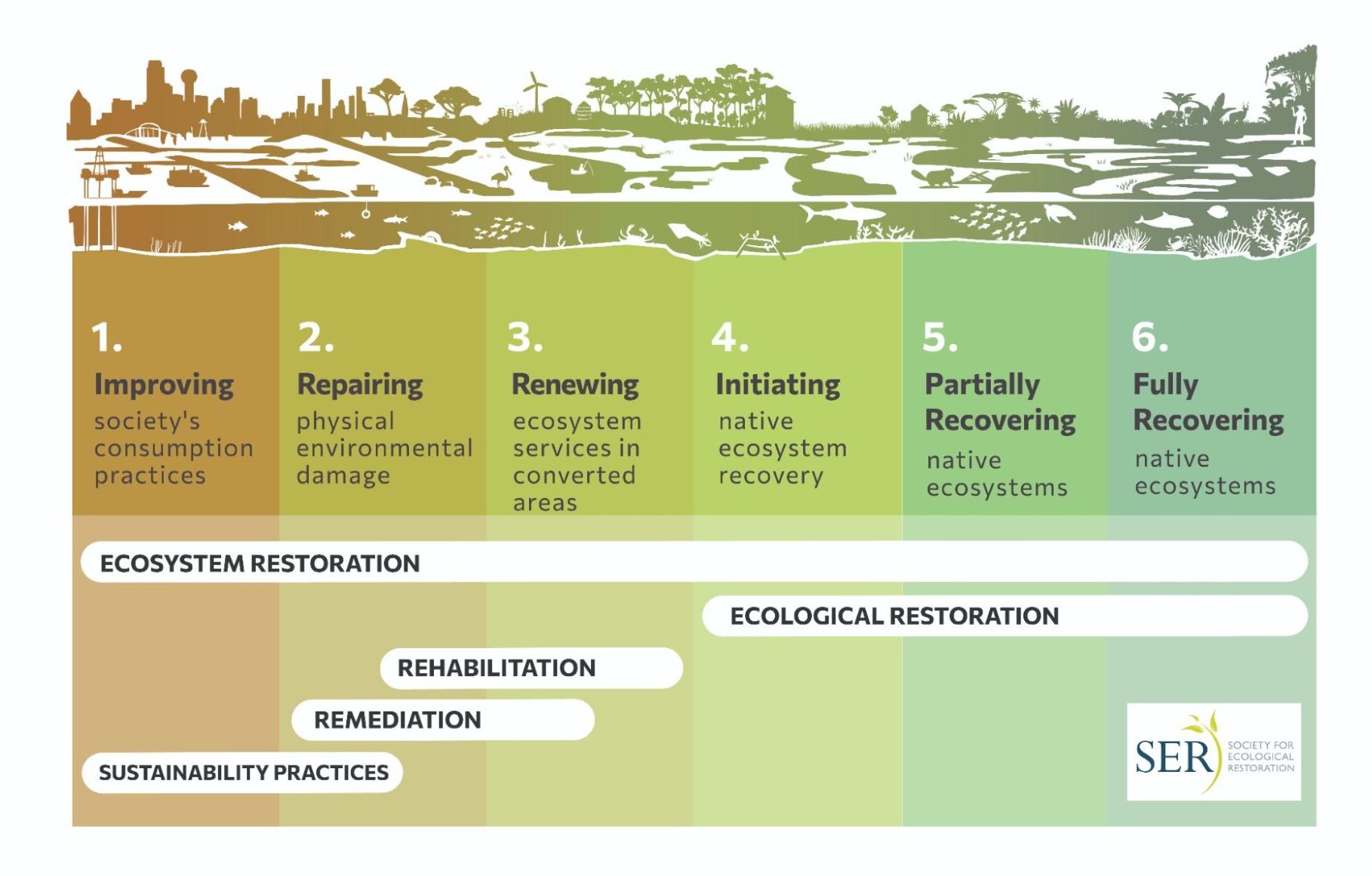
SER’s Restorative Continuum illustrates the interconnections between restorative practices
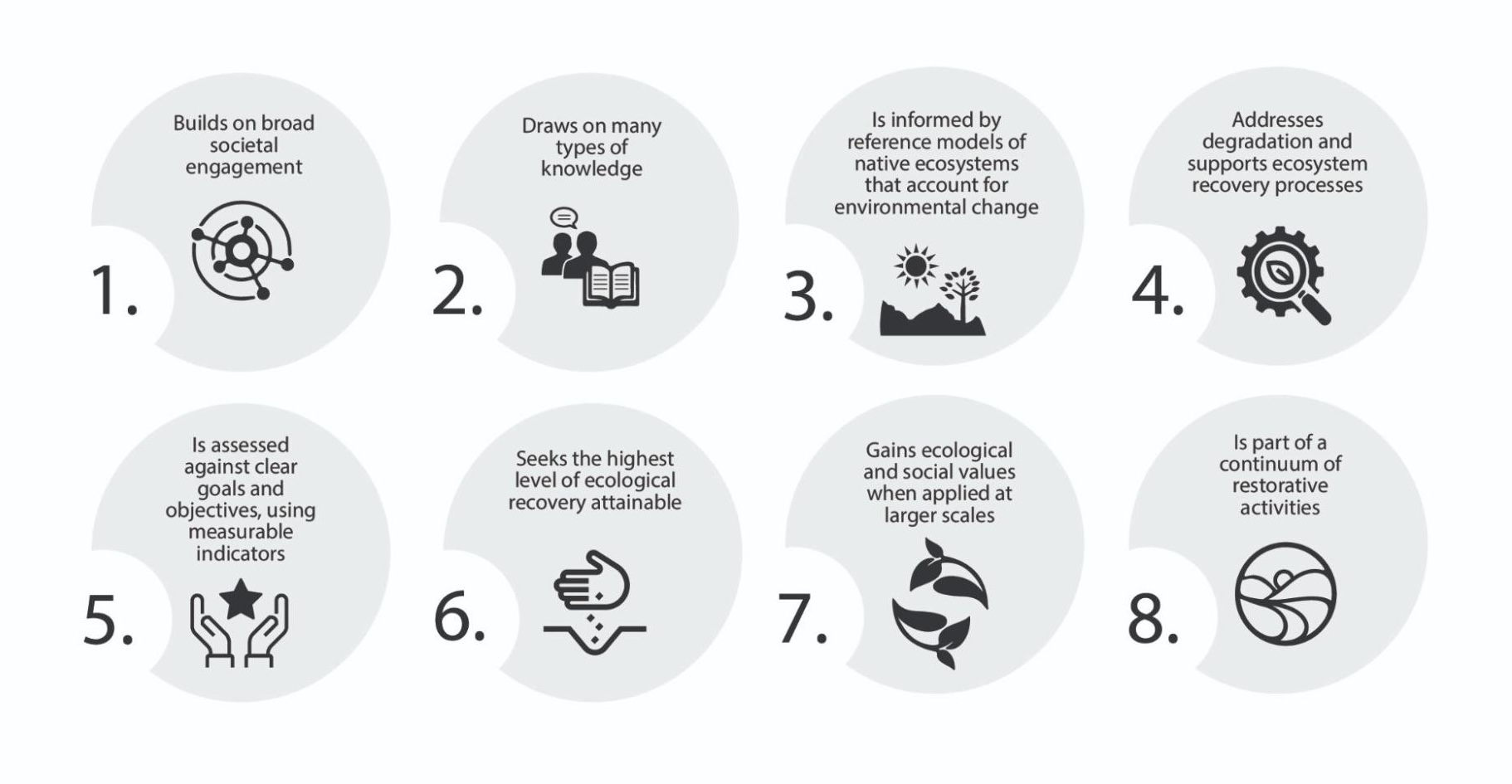
SER’s eight Principles guide the practice of ecological restoration
Society for Ecological Restoration responds to need for unified guidance that builds trust in restoration outcomes for people and nature
WASHINGTON, DC, UNITED STATES, June 23, 2026 /EINPresswire.com/ -- The Society for Ecological Restoration (SER) is pleased to announce the publication of the third edition of its International Principles and Standards for the Practice of Ecological Restoration (“SER Standards”). Widely recognized as the most comprehensive and robust guidelines for the practice of ecological restoration, the SER Standards provide a critical foundation that reduces risk and enhances outcomes across all phases of ecological restoration.More than half the world’s GDP is moderately or highly dependent on nature, with quantifiable evidence of the link between flourishing ecosystems and thriving economies. This latest version of the Standards responds to an accelerating demand for policies, funding, and capacity to scale ecological restoration, alongside wider public recognition of its role in enhancing biodiversity, mitigating and adapting to the impacts of climate change, and improving human health and wellbeing. Recognizing the dynamic nature of restoration science, practice, and policy, the SER Standards continue to be issued as a living document, with updates from the 2nd Edition (2019) developed in close collaboration with a broad spectrum of experts, partners, and contributors.
“The SER Standards are the indispensable roadmap towards outcomes that meet the goals of numerous global, regional, national, and local policies, ” said George Gann, lead author of the Standards and SER’s Global Policy Lead. “The conversation has shifted significantly; the question is no longer about why we need to restore, but about how we deliver optimal results and measure success. Practitioners, policymakers, funders, insurers, and regulators increasingly need tools and guidance that align best practices to reduce risk and uncertainty in planning, implementation, and monitoring at the project, landscape, and seascape levels. The updates we have made respond to these evolving needs, including to help meet Target 2 of the Kunming-Montreal Global Biodiversity Framework (KM-GBF).”
Global Policy Developments and Importance of Societal Engagement
Updates to key definitions in the Standards align with global fora and draw from international recommendations to which SER has contributed, such as guidance for Target 2 of the KM-GBF and standards of practice developed for the UN Decade on Ecosystem Restoration. Effective ecological restoration of degraded landscapes and seascapes delivers demonstrable social-cultural and health benefits for local communities and Indigenous Peoples, and their participation is essential for success. Broad societal engagement, along with the inclusion of different types of knowledge from interested and affected parties, are emphasized in the Standards as key factors for effective restoration.
"Standards matter. Without them, restoration becomes a word we use to feel good rather than a tool that actually works. SER's third edition raises the bar and, importantly, recognises that Wetlands belong at the heart of any serious restoration agenda,” said Dr Musonda Mumba, Secretary General, Convention on Wetlands. “Water is at the nexus of the most critical challenges we face today: climate change, biodiversity loss, food security, human health, and indeed our livelihoods. The SER Standards help galvanize essential collaboration between sectors, and valuable interaction between traditional knowledge systems and state-of-the-art science to help us address them together. The Convention on Wetlands is proud to stand behind this work.”
Expanded Guidance Helps Build the Business Case for Restoration
This 3rd Edition of the Standards provides enhanced guidance for practitioners across five project components: assessment, planning and design, implementation, ongoing management, and monitoring and evaluation. These updates will also facilitate certification of ecological restoration projects to improve transparency and comparability, enabling more effective management of risks through robust monitoring, reporting, and verification (MRV).
To help stimulate investment in restoration, the updated Standards analyze the drivers that can mobilise capital. These include: The development of incentives through international policy and law levers, including mechanisms like the Taskforce on Nature-Related Financial Disclosures (TNFD); An emphasis on restoration as a way to protect natural capital that supports production and builds more resilient supply and value chains; Protection of brand and reputational risk, and enhanced social licence to operate, particularly in sectors like mining; Financial and market incentives, including carbon and biodiversity credits, as well as insurance solutions to derisk restoration projects like SCOR’s NatReCo Initiative.
Applications of the SER Standards
Ecological restoration is part of a continuum of restorative activities under the UN’s overarching term, ecosystem restoration, which also includes sustainability practices, remediation, and rehabilitation. Their interconnections are illustrated by SER’s Restorative Continuum, which recognizes that the specific characteristics of a restoration site and social context determine the best-suited restorative activities. The Continuum has been updated to underscore the importance of all restoration activities, and the flexibility and adaptability of the Standards across all ecosystems, including inland waters, coastal, and marine.
“The science and practice of ecological restoration are constantly evolving and often need to respond to specific restoration contexts. Because of this, the Standards are designed to provide a common foundation but are deliberately flexible. They are adaptable and applicable across different sectors, ecosystems, countries, and economic and cultural contexts,” added Fangyuan Hua, a co-author of the Standards and conservation ecologist at Peking University, China. “The Standards enable us to navigate the inherent complexity of restoration, balance competing priorities, and effectively measure social impact alongside environmental outcomes.”
“The KM-GBF makes it clear that effective restoration must be standards-based; our priority is to deliver it at scale,” said Bethanie Walder, SER’s Executive Director and a co-author of the Standards. “The Principles and Standards are the bedrock of SER’s new REVIVE initiative, a six-part strategy that elevates standards as the normative approach to restoration precisely because it reduces risk and uncertainty, delivers higher-impact outcomes, and overall helps create a global trust layer to scale the restoration industry. We have the knowledge, the tools, and policy tailwinds. Now we must act to meet global targets and deliver a better future for people and our planet.”
Florencia Panizza
Claro Communications Consulting
florencia@claro-comm.com
Visit us on social media:
LinkedIn
Bluesky
Instagram
Facebook
Other
Legal Disclaimer:
EIN Presswire provides this news content "as is" without warranty of any kind. We do not accept any responsibility or liability for the accuracy, content, images, videos, licenses, completeness, legality, or reliability of the information contained in this article. If you have any complaints or copyright issues related to this article, kindly contact the author above.
